Can an AI Coding Agent Build a Useful Music Tool From a Clear Brief?
A clear brief gives an AI coding agent something useful to build and something concrete to fail against. The finished app still has to work. A polished interface, generated source code, and a confident completion message are three different things. None alone proves the tool helps a musician finish a task.
I like starting with one irritation worth removing. For me, that is auditioning several song candidates without repeatedly switching files and losing notes. That is a small enough project to evaluate honestly and practical enough that the result could earn a place in a real workflow. If the tool cannot solve that, it is not ready for something bigger.
This article commissions a proposed build and describes its acceptance checks. ACLTracks did not run an agent build, deliver a music app, or measure implementation speed for this article. It reports no comparison winner or success rate.
Pick a Job Smaller Than a New DAW
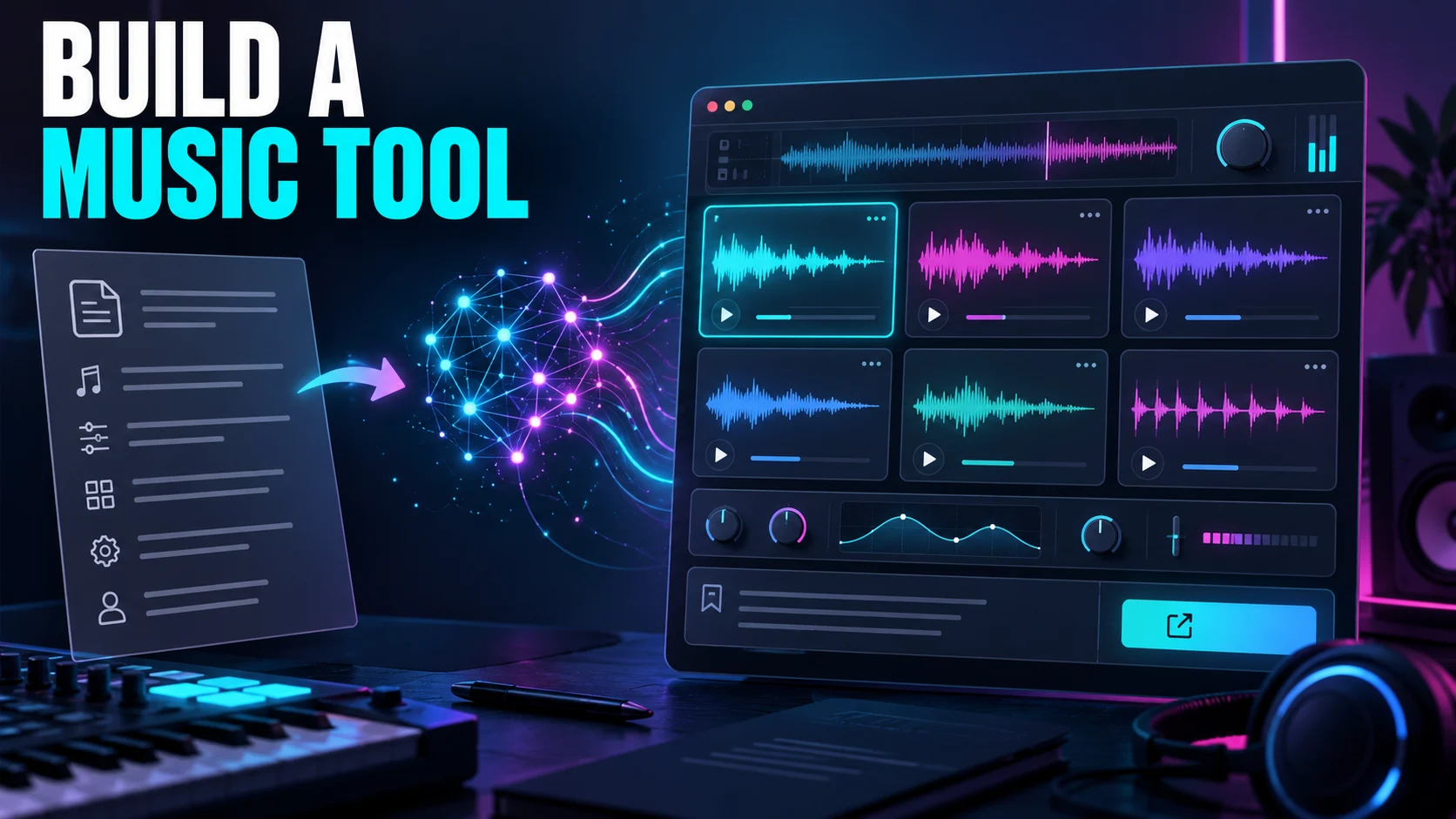
Use an original test set and request a local audio audition board. The proposed first version imports files chosen by the user, lists their names and durations, plays one at a time, adjusts playback volume, and saves notes in an exportable record. It does not need synthesis, multitrack mixing, subscriptions, or a cloud library to solve that job. Those features would only obscure whether the core function works.
Specify the target environment. A browser app running from a local server, a native desktop app, and a hosted website need different packaging and delivery checks. Choose one before writing the commission rather than accepting whichever environment the agent happens to produce. That decision belongs to you.
Name the supported input formats and a reasonable test-file range. If the agent cannot support one, it should explain the limitation. A promise to handle all audio invites a misleading result unless the implementation and test evidence support it. Specifics protect everyone.
Write the Behavior as an Observable Brief
For this illustrative commission: let the user select several permitted audio files, display the accepted files with duration, provide play and pause and seek and gain controls, stop the previous file when another starts, attach notes to each candidate, and export those notes with enough identifiers to find the source again. That is a list of observable behaviors, not a wish about how the interface should feel.
Define rejected inputs too. A corrupt file should produce a clear message without breaking the other entries. An unsupported format should be identified. Two different files with the same name should remain distinguishable. A long name should not conceal the controls. These are the conditions a musician actually encounters.
Make the privacy requirement explicit: the chosen audio stays in the local processing workflow, and the app makes no network upload of it. That is a requirement to verify, not a label to place on the interface because the app has no login screen. Verify it.
Constrain What the Agent May Change
Give the agent an isolated project directory and synthetic or permitted test files. State the output expected and the operations allowed. Keep real music archives, credentials, production systems, and unrelated folders outside the commission. The build should not need access to an entire creative library. That is how accidents happen.
Anthropic Claude Code permissions documents configurable access to reading, editing, and command execution. The applicable settings matter to what an agent can actually do. A task instruction and an enforced permission boundary should support each other. Neither should be assumed from the product name alone.
Ask the agent to identify necessary dependencies and provide startup instructions. If the chosen environment requires installation, make that part of the delivery plan. “It works in my temporary session” is a different result from a tool you can launch again tomorrow. One is a demo. The other is a tool.
Require Evidence From Actual Playback
MDN Web Audio API describes browser audio processing through connected nodes, including sources, gain, and output. That establishes an available implementation foundation. It does not prove the agent chose correct routing, cleaned up previous playback, or supported the requested files. Documentation is not delivery.
Open the delivered app in the intended environment and audition the test set. Change files while audio is playing. Seek near the end, pause and resume, and check that controls still refer to the selected candidate. The most important failures may appear during transitions, not the first successful play. That is where the illusion breaks.
Check the requested local-processing behavior by reviewing the implementation and observed network activity during file selection and playback. Record the scope of that observation. One quiet run does not establish every possible future route, but an unexpected upload during the tested workflow directly fails the brief. That is a hard stop.
Test Notes and Recovery as Seriously as Sound
Create notes on several candidates, export them, and inspect the file. Confirm that text, filenames, and identifiers survive. Reopen the app using the documented procedure and verify the promised persistence behavior. If importing a notes record is part of the brief, test that separately. Do not assume it works because the export looked correct.
A browser app may need users to reselect audio after reopening. Decide whether that is acceptable and explain it in the product. Do not describe an export containing filenames as a backup of the original recordings. The archive and the note record serve different purposes. One preserves audio. The other preserves your thoughts about it.
Try an empty selection, duplicate filenames, an unreadable file, and a note containing punctuation or multiple lines. These are ordinary musician-facing conditions, not elaborate edge cases invented to inflate a test count. Keep the results beside the final version. If the app breaks on a filename with an apostrophe, that is not an edge case. That is Tuesday.
Review the Handoff Before Expanding It
Ask for the saved source, startup instructions, known limitations, and the specific checks performed. Match the completion report to visible evidence. A source-level check, a successful build, and real playback in the target browser prove different layers of the result. Treat them as separate claims.
Keep the original brief and significant revisions. If the agent needs a clarification, record whether it changed the scope or merely chose a routine implementation. If a requirement was removed to get the app working, the final report should say so. That is not failure. That is information.
The recommendation is to accept a narrow tool that works before commissioning a larger music platform. Count the time spent clarifying, reviewing, repairing, and packaging alongside generation. The useful answer to whether an agent can build the tool is the artifact you can run, understand, and recover, with its limitations visible. Everything else is a story about what might happen next time.
Sources and Scope
Official sources were checked October 12, 2026. Product and policy statements describe the cited documentation. Proposed experiments and examples are not completed ACLTracks tests.
