Archiving an AI-Assisted Release
What to keep, where to keep it, and how to prove it can be recovered.
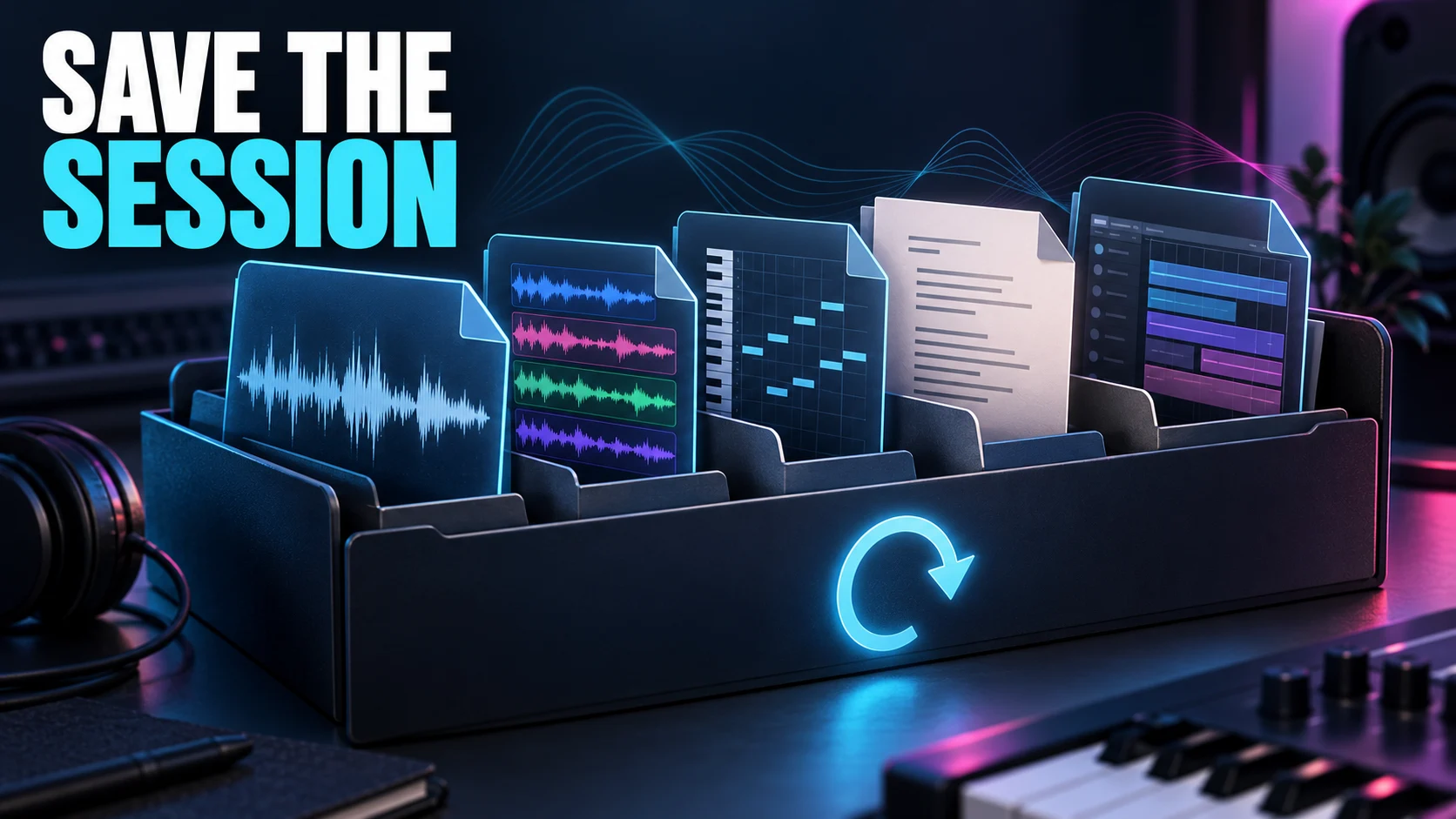
Save enough material to reconstruct what you released and explain how it was made. An AI-assisted song can pass through generation, separation, overdubs, editing, mixing, and distribution. If only the final MP3 survives, the history behind those decisions becomes difficult to recover.
The archive does not need to be elaborate. It needs a clear relationship between the source material, the finished master, the permission record, and the information supplied to the distributor. Start with one release folder and a plain-language index that someone else could understand.
This is a proposed records workflow based on official guidance and ordinary production documentation. ACLTracks did not audit a release archive or establish the rights in a specific recording for this article.
Keep the first outputs, not only the favorite
Retain the original files used in the release before converting, normalizing, separating, or editing them. Record the tool, date, account plan relevant to use, model if exposed, output identifier, prompt, and the settings available to you. If the tool expands your prompt and shows that revision, keep it too.
Preserve the candidates that became part of the final recording. You do not need an unlimited history of unrelated experiments in the release package. You do need to identify the verse, extension, or sound that was actually incorporated. A small source map is more useful than a folder of fifty files called “final.”
Keep generated audio distinct from your own recordings. If you extracted a vocal stem, label it as an extraction. If you sang a replacement, retain the recorded takes and the comp. That distinction prevents a reconstructed part from being mistaken for an isolated original performance.
Record the human work in concrete terms
Save original lyrics with dated revisions, MIDI parts, recorded performances, arrangement versions, and significant edits. Describe what changed: rewritten chorus words, a newly recorded bass line, a cut-down bridge, a manually constructed harmony. “Human edited” is too broad to explain the actual contribution.
The U.S. Copyright Office: AI copyrightability report announcement centers copyrightability on human expressive authorship and evaluates the contribution case by case. That guidance is a reason to describe your process precisely, not a reason to assume a log automatically grants protection. A list of prompts and a manually performed new section are different kinds of evidence.
Keep collaborator agreements beside the contribution record, with access restricted appropriately. The release index can name who supplied an asset without placing private contact details or signatures in a public folder. A public production note and a private permission file serve different audiences.
Save the permission that applied at the time
Retain the relevant service terms, help-page dates, receipts, download records, sample licenses, and specific permissions for incorporated material. Note the intended use and which version each record covers. Current policies can change, and a bookmark alone may later show different wording.
Suno: Rights with a paid subscription ties commercial-use guidance to paid downloads. Preserve the relevant download evidence and the applicable terms for your route through the service. Do not let a receipt stand in for an explanation of every asset in a hybrid recording.
Keep the Suno: Terms of Service with the help guidance. Its download requirements and remix restrictions make the operation you used part of the permission record. If two documents appear to cover the version differently, record the unresolved question and any service confirmation rather than choosing the more convenient wording.
Splice: Sounds licensing FAQ describes its Sounds licenses as non-exclusive and royalty-free. Retain sample identifiers and any certified licenses available. Non-exclusive material can be usable in your release while still requiring care around claims of exclusivity. DistroKid: YouTube Content ID eligibility has separate restrictions on sample-library audio.
Keep a project that can open again
Collect the audio used by the DAW, the session file, automation, routing notes, and important instrument or plugin versions. Where a virtual instrument may be unavailable later, keep a rendered audio version alongside its MIDI. Retain editable material and a playable fallback rather than expecting every plugin to survive unchanged.
Open the session from the archive location. A project that silently reads audio from your Downloads folder is not self-contained. If opening it reports missing files, fix the archive before you treat it as recoverable. Listen to the rendered reference so you know what the session is meant to reproduce.
Do not discard timing information when collecting stems. Keep their shared start position, the tempo map where relevant, the sample rate, and a stereo reference. Individual tracks can sound fine while being impossible to align confidently in a future reconstruction.
Identify the master and the submitted file
Keep the approved lossless master, any delivery conversion, and an exact copy of the file you submitted. Record duration, sample rate, bit depth where applicable, and version. A file hash can identify a byte-for-byte copy. It does not establish the file’s ownership or its musical quality.
Save the final title, artist presentation, credits, explicit-content designation, artwork source and license, release date, distributor identifiers, and store links once assigned. If you later replace a master or change metadata, add a new dated record. Do not overwrite the earlier submission history silently.
For video and social edits, keep the relationship to the release master. A shortened chorus clip should identify its source and its edit. That makes it easier to find which version a collaborator used, and it avoids promoting an obsolete lyric or an unfinished mix by accident.
Prove you can recover the useful material
Maintain more than one copy in locations that do not share a single point of failure. Restrict access to private recordings and permission documents. Periodically open the index, play the master, and check that the editable session can locate its media.
The recommendation is to archive at the moment of release, while the facts are easy to record. A useful package answers four ordinary questions: which file went out, where its parts came from, who contributed, and which permissions support its use. Those answers are easier to preserve now than to reconstruct from memory later.
Sources and scope
Official documentation was checked October 12, 2026. Product descriptions are documented capabilities or vendor claims. Evaluation procedures and examples are proposed work, not completed ACLTracks tests.
